Strategy
AI Tools for PR: How AI is transforming Public Relations in 2026
How AI tools like Suits.ai are transforming PR in 2026 with smarter pitching and scalable workflows.

Benjamin Zenou
CEO & Founder

TL;DR: AI Tools for PR in 2026
Top Tools: PR Newswire, Meltwater, PRophet, Notified, Blackbird.AI, Suits.ai
Key Benefits: Automate research (save 2+ hours/pitch), personalize at scale, monitor narrative risk, optimize for AI search
Compliance: EU AI Act (label synthetic media), FCC (no undisclosed AI voices), FTC (disclose endorsements)
2025 Trends: Agentic workflows, AI search visibility as KPI, publisher-AI licensing deals
Getting Started: Pilot one workflow, track AI visibility, build compliance into SOPs
You're juggling five client crises, three pitch deadlines, and a team meeting, all before lunch. Meanwhile, your clients expect faster turnarounds, more personalized outreach, and proof that every placement drives real business impact. Sound familiar?
The PR landscape shifted dramatically in 2024, and it wasn't just another incremental change. AI moved from experimental side project to mission-critical infrastructure. Google launched AI Overviews that now sit atop search results, synthesizing content before anyone clicks through to your hard-won media placements [6]. Nearly half of journalists started using AI tools for research and transcription [3]. And regulators in both the EU and U.S. began enforcing strict rules around synthetic media and AI-generated content [12].
This isn't about replacing the relationships, intuition, and storytelling that define great PR. It's about amplifying them. The agencies winning new business and retaining clients in 2024 are the ones that figured out how to use AI strategically for research, personalization, and narrative intelligence—while maintaining the human judgment that builds trust.
In this analysis, we'll walk through three major trend clusters reshaping PR: how AI search is changing media discovery, which workflow tools agencies are actually deploying right now, and the new compliance landscape you can't afford to ignore. We'll also look ahead to 2025–2026, where agentic AI workflows and new revenue models will separate leaders from laggards.
AI Tools for PR: Why Your Best Placements May Never Get Clicked
In May 2024, Google flipped the script on search. AI Overviews—those AI-generated summaries that now appear at the top of many search results—started rolling out broadly [6]. Instead of clicking through to your client's earned media coverage, users get a synthesized answer pulled from multiple sources, often without ever visiting a publisher's site.

Example of Google AI Overviews appearing above traditional search results, reducing click-through to publisher sites
The impact has been measurable and, for many publishers, painful. NPR reported that some news sites saw significant traffic declines when AI Overviews appeared for queries related to their coverage [7]. Search Engine Journal noted variance across different query types, but the trend is clear: when AI answers the question directly, fewer people click [8].
This is the zero-click problem on steroids. Your agency secured a tier-one placement, the journalist quoted your client's CEO, and the piece ranks well, but the audience reads the AI summary and moves on. The media value you report to clients suddenly feels hollow when the traffic and engagement don't follow.
But here's the opportunity: AI answer engines like Perplexity, ChatGPT search, and Gemini are also reshaping discovery, and they cite sources. When someone asks these platforms a question, they pull from authoritative, well-structured content and link directly to it. PR teams that optimize for citation in AI answers, not just traditional SEO rank, will capture a new layer of visibility.
What works? First-party data and research that AI systems can confidently reference. Expert commentary with clear entities, facts, and context. Placements on high-authority domains that AI platforms already trust. The old playbook of chasing any coverage is out; the new playbook is about earning the placements that AI will cite and amplify.
For PR executives, this means shifting KPIs. Track how often your clients appear in AI Overviews and answer-engine citations alongside traditional impressions and backlinks. Invest in content strategies that prioritize depth, accuracy, and authoritative sourcing—the signals AI systems use to decide what's worth citing [9].
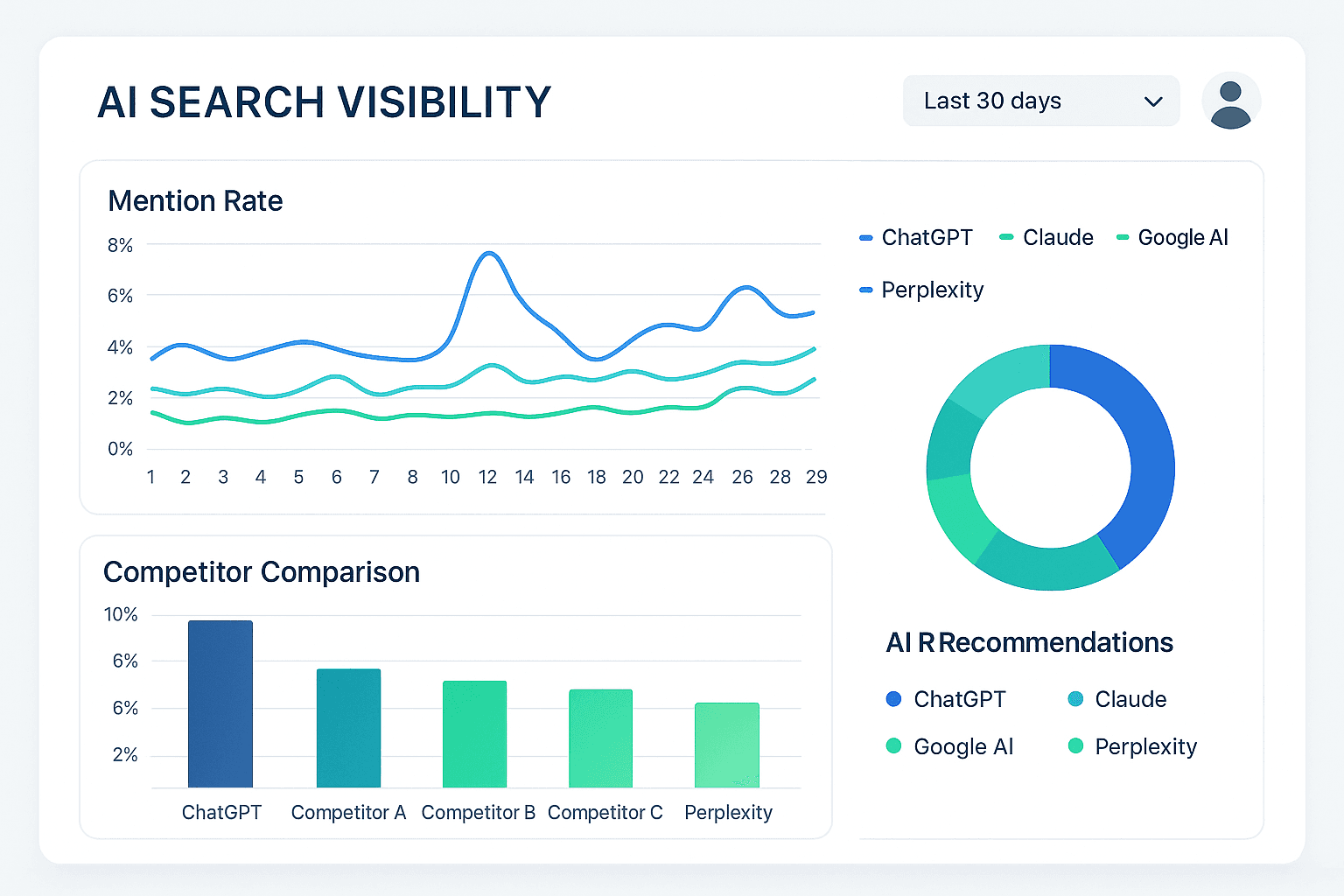
Modern PR dashboards now track AI search visibility alongside traditional metrics
Platforms like Suits.ai help agencies stay ahead of this shift by analyzing 100+ data sources in real time to understand each client's industry, competitors, and narrative gaps. The AI agents surface the insights and angles most likely to earn those high-value citations, then automatically adapt outputs to each client's voice and goals. It's not about gaming the algorithm, it's about understanding what makes content citation-worthy and scaling your ability to deliver it.
The Best AI Tools for PR Agencies in 2026
Let's talk about what's real and what's working. By mid-2024, nearly half of journalists globally were using AI in some capacit, mostly for transcription, research, and drafting outlines [3]. PR professionals followed suit, with most adopting generative AI for similar tasks [2]. The difference between agencies that saw real ROI and those that didn't? They picked tools purpose-built for PR workflows, not generic chatbots.
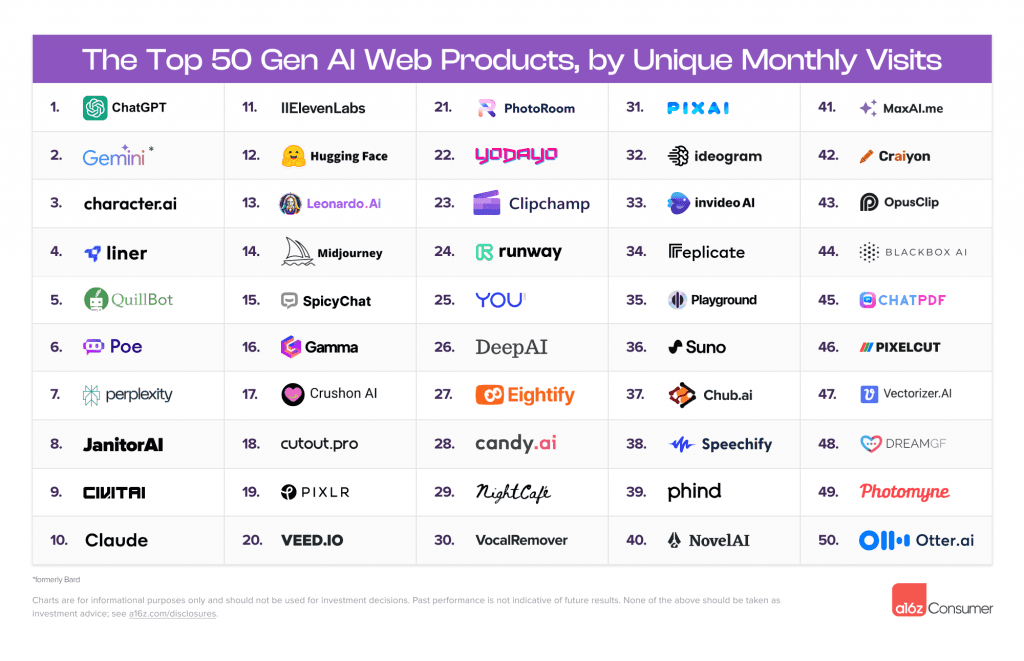
Most-used generative AI tools across professional services in 2024
PR Newswire (Cision AI Suite)
PR Newswire (Cision) launched its AI Suite in September 2024 [15]. It helps teams draft press releases, optimize headlines, and refine distribution targeting—all with enterprise security controls baked in. The key selling point? Speed without sacrificing brand voice. Human review remains mandatory, but the time saved on first drafts and headline testing is significant. For agencies managing dozens of client releases each month, that efficiency compounds fast.
Meltwater AI
Meltwater rolled out major AI innovations in its October 2024 release [16]. The standout feature is AI Journalist Search, which uses predictive matching to identify reporters most likely to cover your story based on their recent work, beat, and engagement patterns. Pair that with AI-generated summaries of media monitoring feeds and tighter Microsoft Copilot integrations, and you've got a platform that cuts research time in half while improving pitch relevance. One agency executive told us their team went from spending two hours per pitch researching journalists to under 20 minutes—and response rates went up.
PRophet by Stagwell
PRophet, developed by Stagwell, combines generative writing with predictive journalist matching [19]. Recognized on the 2024 PR Tech Hot List [18], PRophet generates custom pitches in seconds that reference a journalist's recent coverage and explain why your story fits their beat. It's personalization at scale, and it works because it solves the problem journalists complain about most: irrelevant, generic pitches that waste their time.
Notified
Notified positions its integrated PR platform around a new reality: how you show up in AI search and answer engines [17]. It's a unified system for targeting, distribution, and measurement, designed with AI discovery in mind. For agencies managing multiple clients, the ability to track AI visibility alongside traditional metrics in one dashboard is a significant advantage.
Blackbird.AI
But tools aren't just about efficiency—they're also about risk management. Meltwater partnered with Blackbird.AI in July 2024 to detect and counter coordinated misinformation and narrative attacks [20]. For agencies working in high-stakes sectors—finance, healthcare, politics—this kind of narrative intelligence is no longer optional. You need to spot deepfake content, coordinated campaigns, and emerging crises before they scale.
Suits.ai: The Platform Approach
Here's where the landscape gets interesting. These point solutions solve specific tasks, drafting, targeting, monitoring—but they don't integrate your firm's full methodology. That's where a platform approach like Suits.ai makes a difference. Instead of stitching together five tools and hoping your team uses them consistently, Suits transforms your entire process—research, pitch personalization, client intelligence, deliverable creation—into automated AI workflows that learn your methodology and scale your best work. The AI agents capture your firm's unique approach, speak your brand's language, and pull insights from client-specific knowledge bases. It's not just faster; it's smarter and more consistent across every account.
AI Tools for PR: Feature Comparison Table
Tool | Best For | Key Features | Compliance Support | Starting Price |
|---|---|---|---|---|
PR Newswire (Cision) | Press release automation | AI drafting, headline optimization, distribution targeting | Enterprise security, SOC 2 | Contact for quote |
Meltwater | Media monitoring & journalist matching | AI Journalist Search, predictive matching, monitoring summaries | Data encryption, GDPR compliant | Enterprise pricing |
PRophet | Pitch personalization | Generative writing, predictive journalist matching | Human review workflows | Contact for quote |
Notified | AI search visibility | Integrated targeting, AI discovery tracking | Compliance dashboards | Contact for quote |
Blackbird.AI | Narrative risk intelligence | Misinformation detection, deepfake monitoring | Real-time alerts, audit trails | Contact for quote |
Suits.ai | End-to-end agency workflows | Client intelligence, automated workflows, branded apps | SOC 2 Type 2, full data separation |
AI Tools for PR Compliance: New Rules You Must Follow
If you thought AI adoption was just about productivity, 2024 proved otherwise. Regulators caught up, and the rules around synthetic media, disclosure, and AI-generated content are now enforceable—with real penalties.
The EU AI Act's Article 50 mandates disclosure and machine-detectable marking (watermarking) for synthetic and manipulated media [12]. Enforcement phases through 2025–2026, and it applies to any AI-generated or deepfake content distributed in the EU. For PR agencies, that means labeling AI-generated images, video, and audio, and building watermarking into your creative workflows. If your client runs a campaign with synthetic media and you don't disclose it, both you and the client are liable.
In the U.S., the FCC made AI-generated voice robocalls illegal in February 2024 [10]. By September, they'd issued a $6 million fine for deepfake robocalls tied to election interference [11]. The message is clear: any use of synthetic voice or likeness—endorsements, testimonials, ads—requires clear disclosure and consent. PR teams working on influencer partnerships, celebrity endorsements, or political campaigns need airtight processes to verify authenticity and document consent.
The FTC's Endorsement Guides still apply, too [26]. Clear, conspicuous disclosure of material connections is mandatory—whether AI helped create the content or not. Agencies must verify that influencer partnerships, testimonials, and branded content meet disclosure standards across all platforms. The FTC has shown they'll go after deceptive practices, and "we didn't know" isn't a defense.
The Trust Problem
Beyond regulation, there's a trust problem. Pew Research found in April 2025 that Americans largely expect AI to have a negative impact on news and journalism over the next 20 years [5]. Edelman's 2024 Trust Barometer revealed a wide gap between trust in tech companies and trust in AI itself [14]. For PR professionals, this means clients and audiences will scrutinize how you use AI. Over-indexing on automation in public-facing messaging without emphasizing transparency, human oversight, and verification will backfire.
The smart play? Build compliance into your workflows now. Use platforms that enforce disclosure checks and approval gates before content goes live. Suits.ai, for example, is SOC 2 Type 2 certified with enterprise-grade encryption and full data separation, client data never trains external models. You can configure workflows to require human review, flag synthetic media, and enforce disclosure standards automatically. That's not just risk mitigation; it's a competitive advantage when clients ask how you're managing AI responsibly.
What Journalists Expect from AI-Powered PR Tools
Here's a reality check: journalists are using AI too. By March 2024, 28% of U.S. journalists reported using generative AI, with another 20% planning to explore it [1]. But there's a catch. The Reuters Institute found that journalists and audiences are most comfortable with AI "behind the scenes"—transcription, translation, research, personalization—and far less comfortable with AI writing hard news [4].
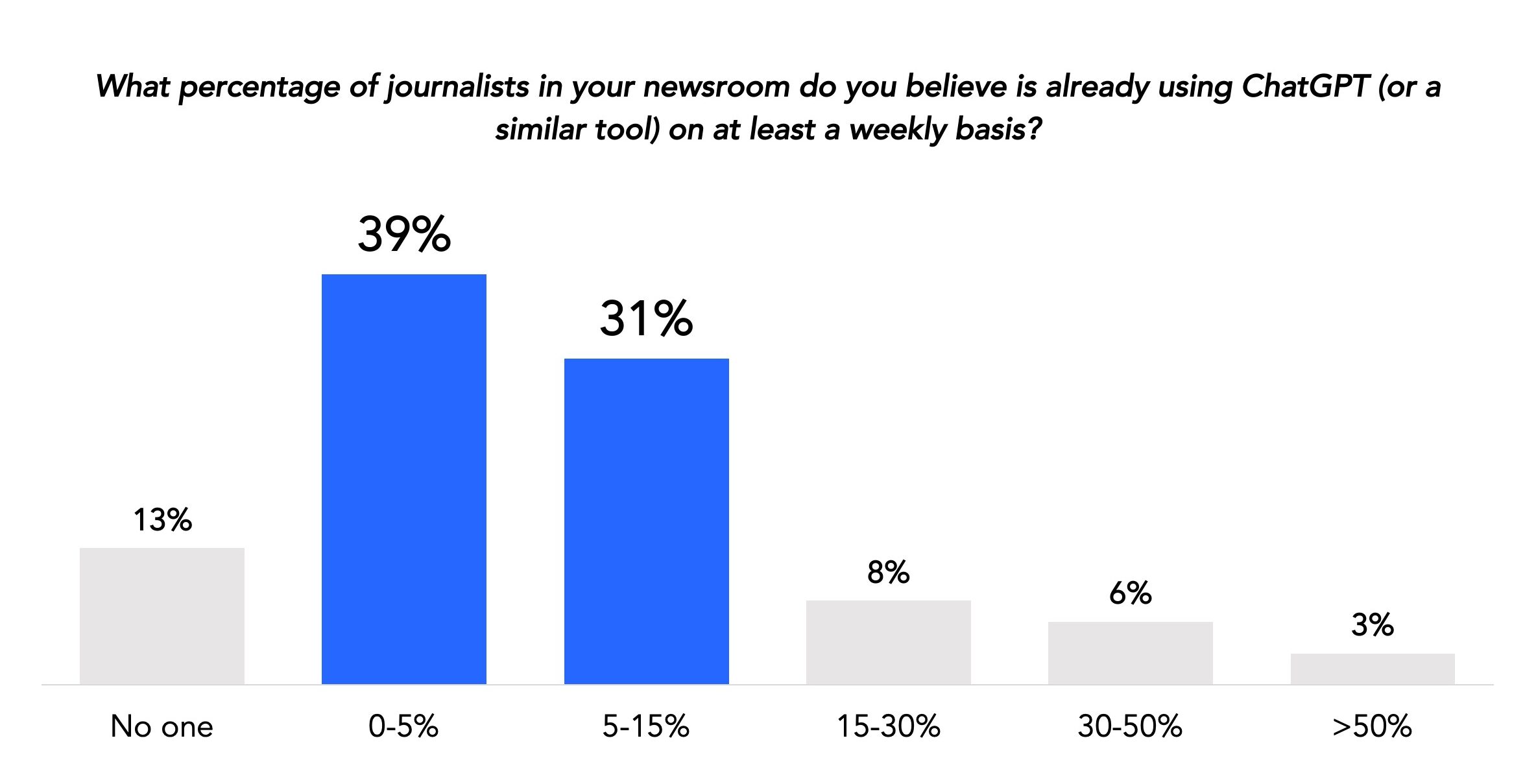
Survey data showing how journalists are adopting generative AI tools in newsrooms
What does that mean for your pitches? Journalists value speed, relevance, and source-rich angles. AI can help you deliver all three. But they can also spot a generic, obviously AI-generated pitch from a mile away, and they'll delete it without a second thought.
Personalization matters more than ever. Reference recent coverage. Explain why your story fits their beat. Provide ready-to-use data, expert quotes, and a clear news hook. Use tools like PRophet or Meltwater's AI Journalist Search to identify the right reporter and draft a personalized outline—then add human context, a genuine connection, and a reason why this story matters now.
One agency creative director put it this way: "AI gets us 80% of the way there. The last 20%—the human touch, the relationship, the timing—that's what gets the story placed." That last 20% is also what keeps journalists from blocking your emails.
Suits.ai elevates this process by pulling insights from each client's knowledge base, recent coverage, and competitor activity to generate hyper-relevant pitch angles. The AI agents then adapt tone and detail to match the target journalist's style and beat, all while reflecting your agency's brand voice. It's not about replacing your judgment—it's about giving you a head start so you can focus on the relationship and the story, not the research grind.
The Future of AI Tools for PR: 2025–2026 Outlook
If 2024 was the year AI tools went mainstream in PR, 2025–2026 will be the phase of agentic AI—systems that don't just assist with single tasks but run multi-step campaigns with minimal human intervention.
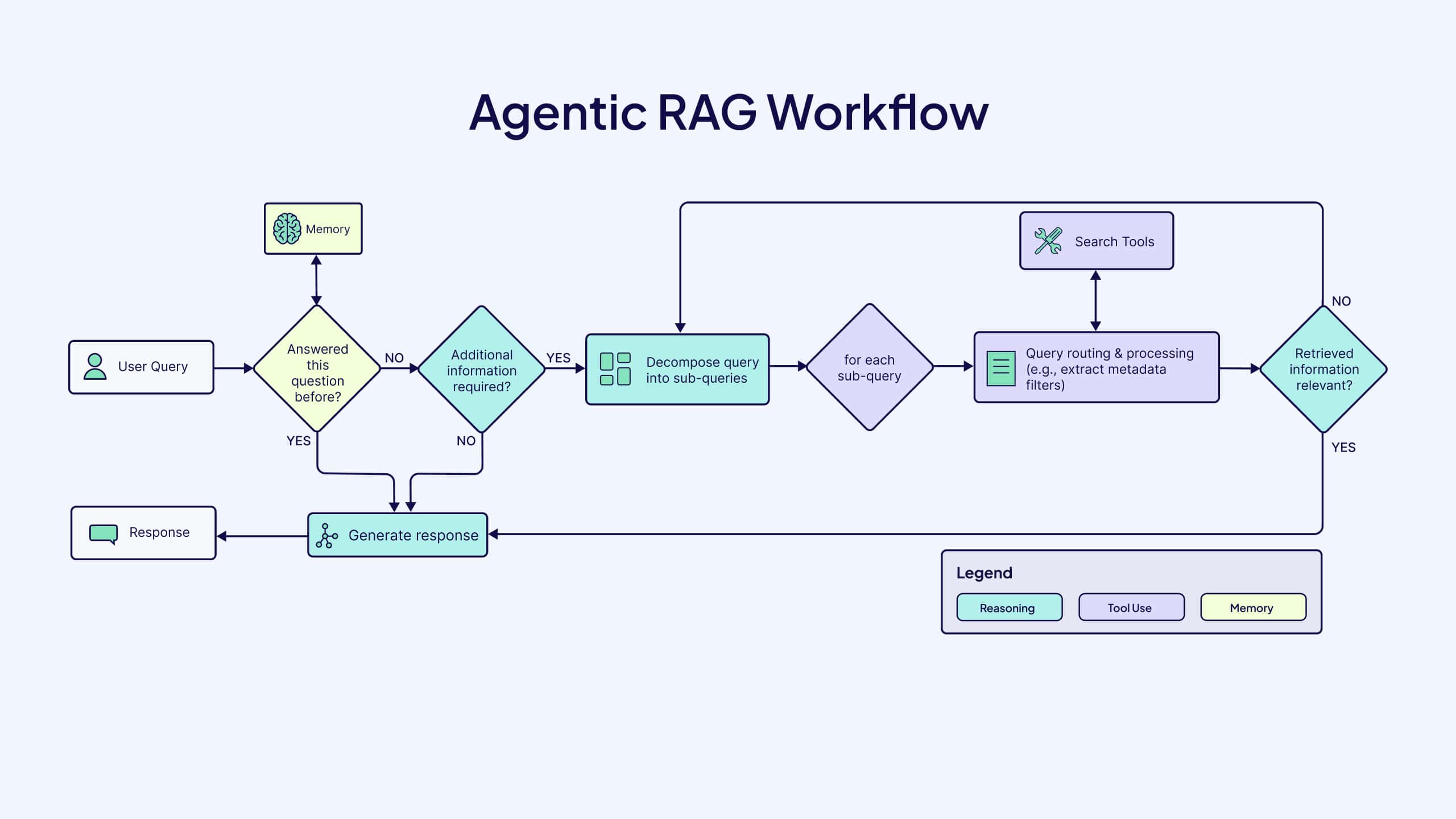
How agentic AI workflows automate multi-step processes from monitoring to execution
How Agentic AI Tools for PR Will Change Campaign Execution
Agentic AI represents the next evolution beyond single-task copilots. By 2026, expect AI tools for PR to autonomously execute multi-step campaigns:
Monitoring: AI agent scans client news, competitor activity, and trending topics
Ideation: Identifies story angles aligned with client expertise and current news cycles
Targeting: Predicts which journalists are most likely to cover the story based on beat, recent coverage, and engagement history
Drafting: Generates personalized pitches referencing each journalist's work
Distribution: Schedules outreach and follow-ups based on optimal timing signals
Reporting: Summarizes results, sentiment, and next-step recommendations
Your role shifts from execution to strategy, relationship management, fact-checking, and final approval. The AI handles the operational heavy lifting.
Example: A Suits.ai agent monitoring a fintech client detects breaking regulatory news, identifies 12 relevant journalists, drafts personalized pitches, and queues them for your review—all within 15 minutes of the news breaking.
That's not science fiction. The product updates from PR Newswire, Meltwater, Notified, and PRophet in 2024 are all moving in this direction [15] [16] [17] [19]. The question is whether your agency will lead this shift or scramble to catch up.
Publisher–AI Licensing Deals
Another trend to watch: publisher–AI licensing deals. OpenAI's partnership with News Corp in May 2024 is just the beginning [22]. As more AI platforms license content from major news brands, those outlets will carry more weight in AI answers. For PR teams, that means earned placements on tier-one and industry-authority publications will become even more valuable. The old strategy of chasing any coverage won't cut it, you need to prioritize the outlets AI systems are likely to index and cite.
New Revenue Models
There's also a revenue opportunity most agencies haven't tapped yet. Turn your proprietary AI workflows into subscription-based client apps. Imagine a media-monitoring agent customized for a client's industry, delivered as a branded tool they access 24/7. Or a competitive-intelligence dashboard that updates in real time. You've transformed a one-off project into a recurring revenue stream, and you've deepened client lock-in because the tool becomes indispensable.
Suits.ai is built for exactly this model. You create AI agents that capture your firm's methodology, then package them as branded client applications. You're not just selling hours—you're scaling your expertise, multiplying revenue, and keeping your competitive edge intact.
Narrative-Risk Monitoring Becomes Standard
Finally, expect narrative-risk monitoring to become standard. The Meltwater–Blackbird partnership is a signal of what's coming: real-time detection of coordinated attacks, deepfakes, and misinformation [20]. Crisis playbooks will include AI-powered early-warning systems and automated corrective-messaging workflows. Agencies that can offer this level of protection will win high-stakes accounts in finance, healthcare, and politics.
How to Implement AI Tools for PR (Without Overhauling Your Entire Agency)
You don't need to rip out your entire tech stack tomorrow. Start with a focused audit and a single high-impact pilot.
Strategic roadmap for implementing AI tools in PR agency workflows
Step 1: Audit Your Current AI Usage
Survey your team: Who's using ChatGPT, Meltwater AI, or other tools? For what tasks? Where are the bottlenecks—research, personalization, reporting—that AI could address? You'll likely find pockets of innovation and pockets of resistance. The goal is to identify what's working and where the gaps are.
Step 2: Pilot One High-Impact Workflow
Pick a single client or campaign and automate journalist research and pitch personalization. Measure time saved, response rates, and quality. If it works, scale it to other accounts. If it doesn't, iterate or try a different workflow. The key is to prove value quickly and build momentum.
Step 3: Invest in Compliance and Training
Update your SOPs to require human review of AI-generated content. Train your team on disclosure requirements—EU AI Act, FCC, FTC—and how to label synthetic media. Build approval gates into your workflow tools. This isn't just about avoiding fines; it's about building trust with clients and journalists.
Step 4: Track AI Visibility as a New KPI
Monitor how often clients appear in AI Overviews, Perplexity citations, and ChatGPT answers. Adjust your content strategy to prioritize authoritative, citation-worthy placements. If you're not measuring it, you can't optimize for it.
Step 5: Consider a Platform Approach
Point solutions solve specific tasks, but they don't integrate your firm's full methodology. A platform like Suits.ai captures your processes, client intelligence, and brand voice in one place. It turns AI from a tool into a scalable extension of your team—one that learns, adapts, and amplifies your best work without losing the unique edge that sets your firm apart.
—
Frequently Asked Questions About AI Tools for PR
What are the best AI tools for PR agencies in 2025?
The best AI tools for PR agencies in 2025 include PR Newswire (Cision AI Suite) for press release automation, Meltwater for media monitoring and journalist matching, PRophet for pitch personalization, Notified for AI search visibility, and Blackbird.AI for narrative risk management. Suits.ai offers end-to-end workflow automation that captures your agency's unique methodology.
How do AI tools improve PR efficiency?
AI tools for PR improve efficiency by automating time-consuming tasks like journalist research (reducing research time from 2 hours to under 20 minutes), personalizing pitches at scale, monitoring media coverage in real-time, and generating draft content that maintains brand voice while requiring human review for accuracy and compliance.
What compliance requirements apply to AI tools for PR?
PR agencies using AI tools must comply with the EU AI Act Article 50 (requiring disclosure and watermarking of synthetic media), FCC regulations prohibiting AI-generated robocalls without disclosure, and FTC Endorsement Guides mandating clear disclosure of material connections in influencer and branded content—regardless of whether AI assisted in creation.
How much do AI tools for PR cost?
AI tools for PR range from free tiers (basic features) to enterprise solutions starting at $500–$5,000+ per month depending on team size, features, and integrations. Most enterprise platforms (Meltwater, Cision, Suits.ai) require custom quotes based on agency needs and client volume.
Can AI tools replace PR professionals?
No. AI tools for PR augment and amplify human expertise but cannot replace the relationships, strategic judgment, and creative storytelling that define effective public relations. The most successful agencies use AI to handle research, drafting, and monitoring while PR professionals focus on strategy, relationship management, and final content approval.
The Bottom Line
AI in PR moved from experimental to essential in 2024. Google's AI Overviews changed how audiences discover content. Powerful new tools from Cision, Meltwater, PRophet, and Notified automated research, drafting, and targeting. Regulators in the EU and U.S. began enforcing strict rules around synthetic media and disclosure.
The agencies that adopted AI strategically—automating the grind, personalizing at scale, monitoring narrative risk, and optimizing for AI citations—are winning more media coverage, delivering faster, and opening new revenue streams. The agencies that waited are now playing catch-up.
Your competitors are already using these tools. Journalists expect faster, more relevant pitches. Clients will demand proof you're leveraging AI to deliver better results. The question isn't whether to adopt AI—it's whether you'll lead the transformation or scramble to follow.
AI won't replace the relationships, intuition, and storytelling that define great PR. But it will amplify them. And the firms that figure out how to capture their methodology, scale their expertise, and turn AI into a revenue multiplier—without losing their unique voice—will own the next decade.
Ready to explore how Suits.ai can turn your agency's expertise into AI agents that scale your best work, deepen client relationships, and multiply your revenue? Let's talk.
Sources
[5]: Americans think AI will have a bad effect on news, journalists
[6]: Generative AI in Search: Let Google do the searching for you
[7]: Will Google's AI Overviews kill news sites as we know them?
[8]: Google AI Overviews Impact On Publishers & How To Adapt Into 2026
[9]: Why PR is becoming more essential for AI search visibility
[11]: FCC fines man behind election interference scheme $6 million (PDF)
[13]: Generative AI and deepfakes: a human rights approach to regulation
[14]: Innovation: The Trust Test for Business (2024 Edelman Trust Barometer)
[16]: Meltwater delivers AI-powered innovations in its 2024 Year-End Product Release
[19]: How to Use AI to Create Perfect Personalized PR Pitches in Seconds
[21]: How PR and Comms Professionals are Using Press Releases in 2024 (APAC)
[22]: News Corp and OpenAI Sign Landmark Multi-Year Global Partnership
[23]: Digital News Report 2024
[24]: Google releasing massive search quality enhancements in March 2024